
Notes on movement, ritual and quiet strength
Five short reflections from the studio, on how we begin, how we prepare, what resistance teaches us and why comfort matters. Take them one at a time, or all at once with a cup of something warm.
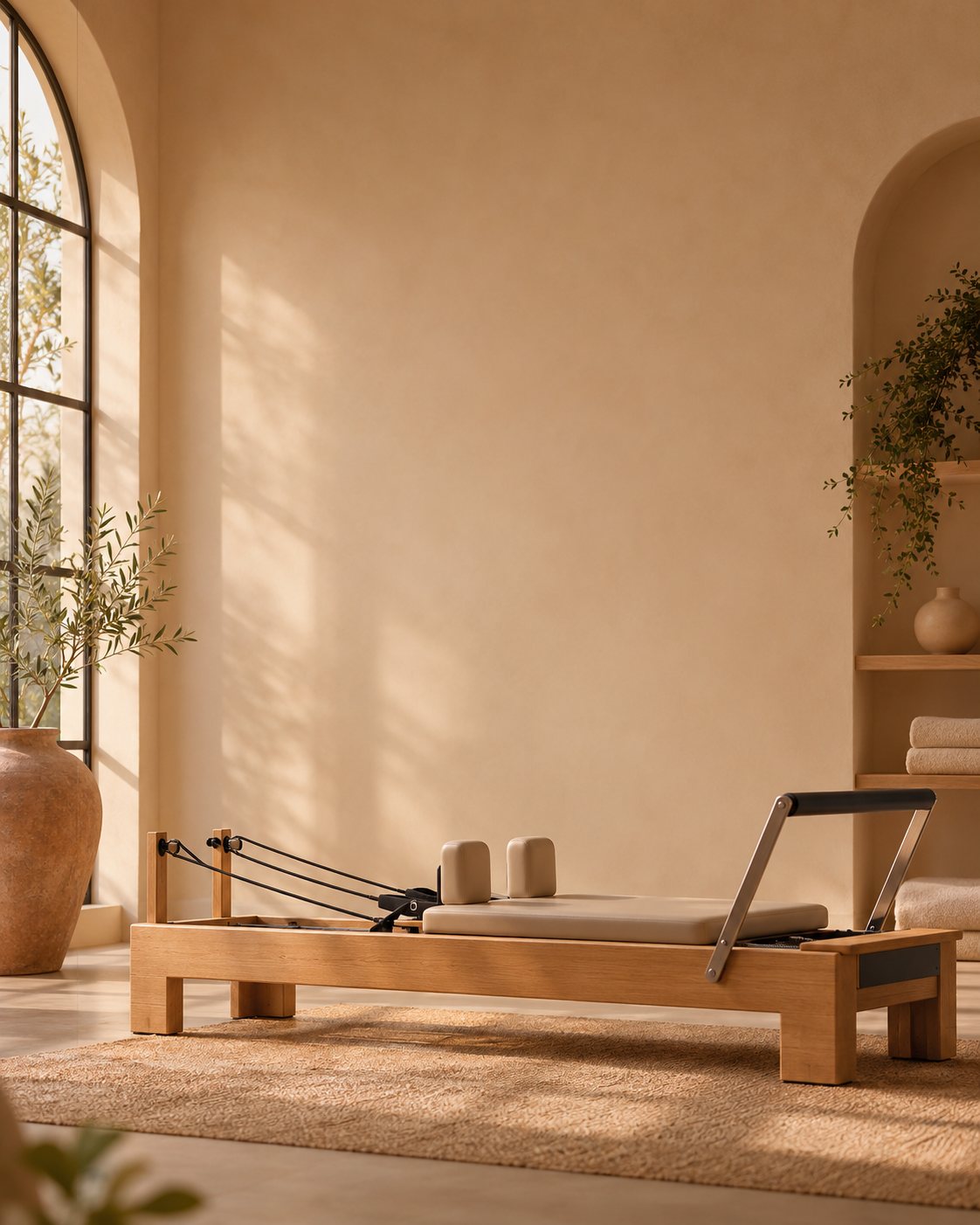
The quiet before class
Why the first minute matters
Before the first spring, there is a pause. You arrive, put your things down, and let the room settle around you.
It is easy to rush this part. We hurry in, check the time, and start moving before we have really arrived. But the first minute of a session quietly sets the tone for everything that follows.
Try giving it your full attention. Breathe out slowly and let your shoulders soften. Feel your feet find the floor, and notice how your weight settles through them. Look around the room and take in the light, the equipment, the stillness.
We believe the way you begin shapes the whole practice. A calm start makes it easier to move with control, to listen to your body, and to stay present when the work gets harder.
At MAISAN, this idea sits at the centre of everything we design: strength that begins with ease.
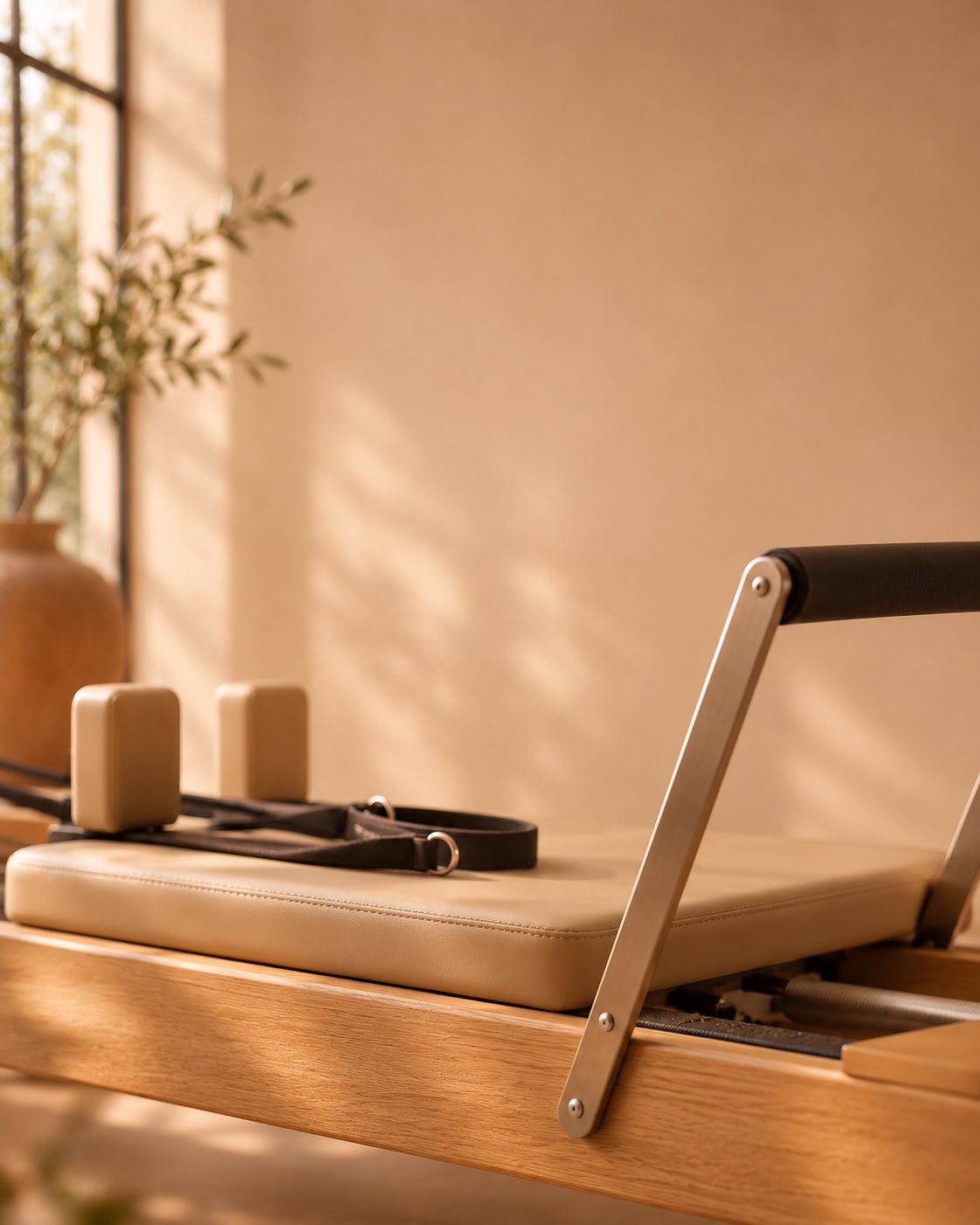
Setting up your space
Small rituals, steady practice
Every good session starts with a good set-up. Check the footbar, set your springs, arrange the straps. These small steps are easy to treat as chores, but they are part of the practice.
Setting up is a way of preparing your mind as much as the equipment. Each adjustment is a moment to slow down and decide how you want to move today. When you set the space with care, you walk into the work already focused.
A few small habits can help. Wipe down the surfaces you will touch. Set the springs deliberately, not by habit. Place your things within reach so nothing interrupts your flow. Take one breath before you begin.
It is the same in how we design. The details you do not notice are often the ones that matter most, and the care that goes into them shows in how effortless the whole thing feels.
Small rituals, steady practice.
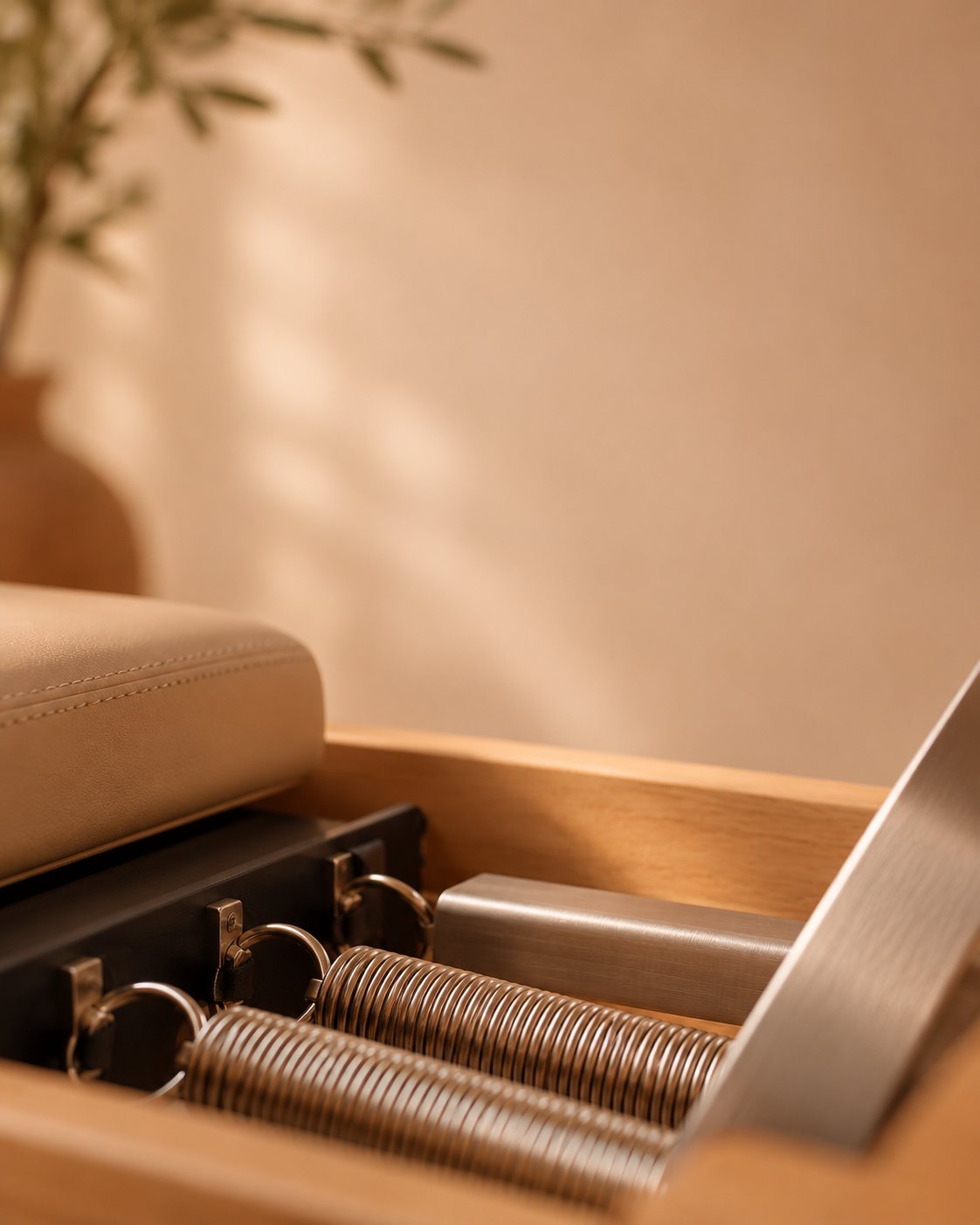
Resistance is the teacher
Strength is built slowly
The springs do the quiet work. Each one asks a little more of you, and you answer with control, not force.
Reformer Pilates is different from lifting or running because the resistance is constant and smooth. There is no momentum to lean on. The spring tells you exactly how well you are moving, and it does so honestly.
That is why resistance can be a good teacher. It shows you where you rush, where you hold your breath, and where a little more control makes the movement feel completely different.
Choose the setting that challenges you without taking your form away. Strength is built slowly, one steady repetition at a time, and it lasts longest when it is built with patience.
Grounded in strength. That is where grace begins.

On softness
Comfort is a quiet form of care
Soft things are easy to overlook. A well-made fabric, a folded linen, a quiet room.
We tend to think of strength as hard and softness as its opposite. In our experience the two work together. When your body feels at ease, it moves more freely, and it is easier to find control without tension.
We think comfort is a quiet form of care, and it shapes how we move. The things we choose to wear and surround ourselves with are not small decisions, because we feel them for the whole hour we practise.
Today, notice what feels soft around you, and let your shoulders drop.
Morning light
Grounded in Strength. Woven for Grace.
The best part of the studio is the light before everyone arrives. It moves slowly across the wall, and so should we.
These notes began with a simple belief: that strength and grace are not opposites. You can build real strength through patience, and you can move with grace without giving up effort.
Grounded in Strength. Woven for Grace.
Something is being woven. MAISAN is coming soon.
Grounded in Strength. Woven for Grace.